




.svg)

Content
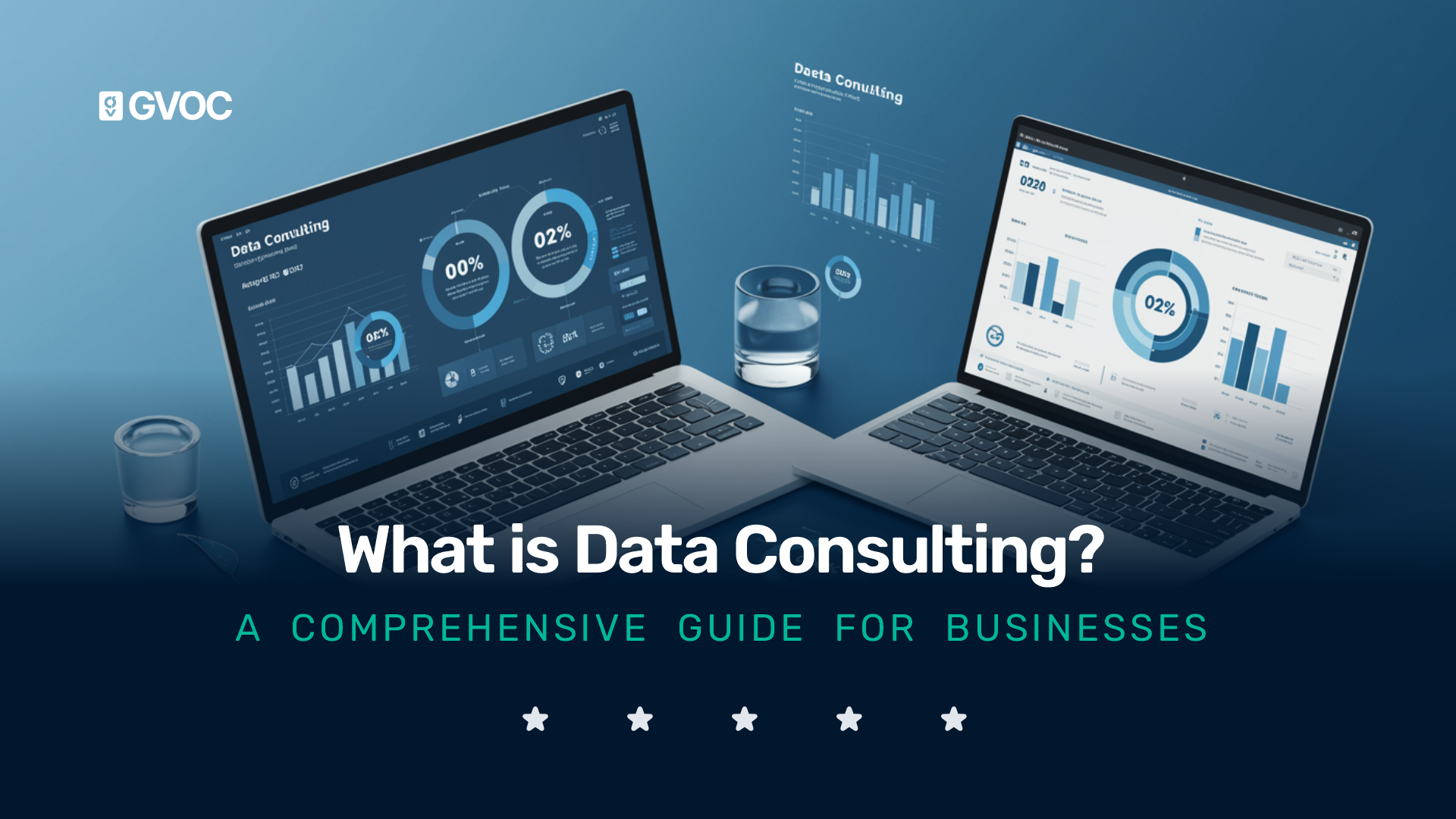
Data is frequently described as the "new oil." However, for most Small and Medium Enterprises (SMEs), data feels less like a fuel and more like a flood. Raw data is inherently messy, fragmented, Data consulting is the specialized professional service that builds the refinery, turning that raw information into "Growth Intelligence."
According to Deloitte, high-maturity organizations are twice as likely to exceed their business goals as those at the lower end of the data maturity scale. Yet, many businesses confuse data consulting with basic IT support or simple report building. True data consulting is a strategic intervention designed to align a company’s technical architecture with its commercial objectives.
The Core Pillars of Data Consulting
Data consulting is not a monolithic task; it is a multi-layered discipline that bridges the gap between software and strategy. Practitioners generally divide the work into four distinct pillars.
1. Data Strategy and Governance
Before a single line of code is written, a consultant establishes the "Rules of the Road." This involves defining what data needs to be collected, who owns it, and how it is protected. Research from the MIT Sloan School of Management suggests that a robust data strategy can improve operating margins by up to 60%. Consultants ensure that your data follows ISO/IEC 38505-1 standards, treating data as a corporate asset rather than a byproduct of operations.
2. Data Engineering and Architecture
This is the "plumbing" phase. Consultants design and build the infrastructure—such as Data Lakes or Warehouses—that allows information to flow from various sources (like your CRM, ERP, and Social Media) into a centralized repository. They eliminate "Human Middleware" by using ETL (Extract, Transform, Load) processes to automate data movement.
3. Business Intelligence (BI) and Visualization
Once the data is clean and centralized, it must be made legible. Data consultants build interactive dashboards that replace static month-end reports. Instead of asking "What happened?", these tools allow leaders to ask "Why is this happening?" in real-time. According to Gartner, the shift toward "augmented analytics" is now the primary driver for SME competitiveness.
4. Advanced Analytics and AI Readiness
For mature organizations, data consulting extends into predictive modeling. This involves using historical data to forecast future trends, such as customer churn or inventory demand. Crucially, a consultant ensures your data is "AI-Ready"—because an AI model trained on fragmented or biased data will only produce "automated errors."
When Does a Business Need a Data Consultant?
Not every business requires an outside expert. However, there are three "Trigger Events" where the ROI of data consulting is most evident:
- The Scaling Wall: Your manual processes (spreadsheets) worked when you had 100 customers, but they are breaking now that you have 1,000.
- System Fragmentation: You have invested in expensive tools like Salesforce, HubSpot, or NetSuite, but none of them share information, leading to conflicting "truths" in board meetings.
- Decision Paralysis: You have plenty of data but no clarity. If you cannot identify your most profitable customer segment or your true cost of acquisition within 60 seconds, you have a data bottleneck.
Common Mistakes: The "Tool-First" Fallacy
A frequent error SMEs make is hiring a consultant to "set up a tool" (e.g., "We need someone to install Tableau"). Professional data consultants argue that the tool is the last 10% of the journey.
If you build a high-end dashboard on top of a broken data architecture, you are simply "beautifying the mess." This leads to Technical Debt, where the cost of maintaining the shiny new tool eventually exceeds the value it provides. A credible consultant will prioritize Data Hygiene and Workflow Integration over visual flourishes.
Who This Is Not For
Data consulting is a significant investment in both time and capital. It is generally not recommended for:
- Early-Stage Startups: If you are still finding Product-Market Fit, your data is too volatile to build permanent architecture around.
- Static Businesses: If your market and internal processes haven't changed in a decade and your growth is steady, the cost of complex automation may not be justified.
Conclusion
In an era of rapid AI adoption, the gap between "data-informed" businesses and "gut-feeling" businesses is widening. Data consulting isn't just about technical fixes; it’s about building a culture of Growth Intelligence. By removing the friction between your systems and your strategy, you empower your team to stop managing spreadsheets and start managing growth.
Unlock Your Growth Intelligence
The difference between data and insight is the architecture that connects them. Don't let your business's most valuable asset sit idle in silos.
Contact GVOC today for Growth Intelligence to transform your fragmented data into a clear roadmap for enterprise scaling.
.png)
.png)
.svg)

.svg)
.jpg)
.jpg)
.jpg)
.jpg)
.jpg)



Case Studies & Strategies
Dive into our newsletter for a wealth of knowledge in digital marketing



GVOC
rc 15935169
Let's help you understand the Power of Data to Drive Innovation, Enhance Efficiency, and Accelerate Business Growth

Actionable insights for smarter business decisions
Tailored solutions for optimizing performance
Analytics for business growth opportunities
.png)
.png)
.png)
